
Perhaps a round or two of drinks are in order, on my part. Thanks all for keeping up with the posts while I continued to prove my lack of blogging experience. Back to business...
I've just been wondering what everyone thinks Esperanza's feelings towards her father are. I've noticed that she has seen a lot of men who have not treated women well; the man who kissed her at work, Mamacita's husband, etc. She also seems to think about her "duties" as a woman. The expectations that are held for her, just because she is a woman (i.e. when she talked about her hips as being there because she will have to have a baby someday). I have been thinking about this, why she might have these feelings about being held up to expectations of being a woman in society and I'm starting to think her father might be the basis of this. He sees her as the oldest child, yes, but also as the one who must take care of all her siblings, the one who must get a job if she wants to continue through school. Does anyone else see this? Or, is there some other thing I'm not necessarily seeing?
Wednesday, March 19, 2008

when is everyone free?
hi. group.
maybe we could all meet sometime next week to have an in person group discussion.
please list what times work best for you here. and we can figure something out.
I have been thinking about Necole's experience of Esperanza as isolated... and my reading is sooo different, maybe not: she keeps company with her imagination, and learning. One of the arcs in the novel is the progression of language and the inclusion of literary terms. As I read "leap and somersault like an apostrophe and comma" (p.71) I remembered the time when I discovered books as companions. They were reliable, and interesting, and available when you needed them. I imagine Esperanza making the same discovery. When she speaks of finally arriving at the house on a hill with a yard and a garden and bums in the attic, I love her for wanting to go somewhere else, but not wanting to leave anyone behind. But I suppose we each read the book in an autobiographical way. Necole, you probably like people more than I do... so, you wonder where her posse is. I'm busy noticing how she is growing towards her goal of expanded possibilities, and can't imagine she has time to be lonely. There is so much about shoes. People talk about finding one's voice, but for Esperanza it seems to be about finding her feet.
Beth, I am going to think about music for your visuals... The balloon photo reminds me of a Truffaut film, but I don't hear the music yet...
Beth, I am going to think about music for your visuals... The balloon photo reminds me of a Truffaut film, but I don't hear the music yet...
Saturday, March 15, 2008
author information and links!!!!
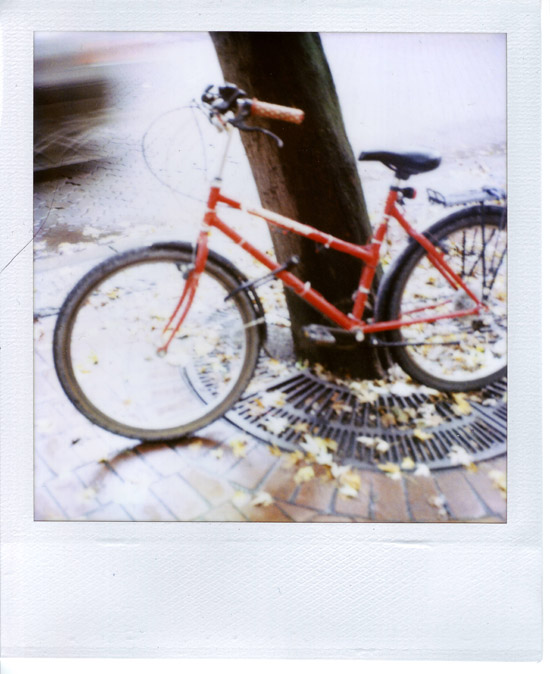
Take off on your own "bike" and explore the links below!!!
http://www.sandracisneros.com/
http://www.teachervision.fen.com/resource/reading/5952.html
http://www.masconomet.org/teachers/trevenen/mango.html
http://www.webenglishteacher.com/cisneros.html
http://teachereducation.wlu.edu/courses/practicum/practicum%20fall%202004/LP/Mango%20St.%20Unit.htm
this was written on 8.28.07 and taken from http://www.sandracisneros.com/bio.php
I was born in Chicago in l954, the third child and only daughter in a family of seven children. I studied at Loyola University of Chicago (B.A. English 1976) and the University of Iowa (M.F.A. Creative Writing 1978).
I've worked as a teacher and counselor to high-school dropouts, as an artist-in-the schools where I taught creative writing at every level except first grade and pre-school, a college recruiter, an arts administrator, and as a visiting writer at a number of universities including the University of California, Berkeley, and the University of Michigan, Ann Arbor.
My books include a chapbook of poetry, Bad Boys (Mango Press 1980); two full-length poetry books, My Wicked Wicked Ways (Third Woman 1987, Random House 1992) and Loose Woman (Alfred A. Knopf 1994); a collection of stories, Woman Hollering Creek and Other Stories (Random House l991); a children's book, Hairs/Pelitos (Alfred A. Knopf 1994); and two novels, The House on Mango Street (Vintage 1991) and Caramelo (Knopf 2002). Vintage Cisneros, published in 2003, is a compilation of selections from my works.
The House on Mango Street, first published in 1983, won the Before Columbus Foundation's American Book Award in 1985, and is required reading in middle schools, high schools, and universities across the country. It has sold over two million copies since its initial publication and is still selling strongly.
Caramelo was selected as notable book of the year by several journals including The New York Times, the Los Angeles Times, the San Francisco Chronicle, the Chicago Tribune, and the Seattle Times. In 2005 Caramelo was awarded the Premio Napoli and was short listed for the Dublin International IMPAC Award. It was also nominated for the Orange Prize in England.
Caramelo and The House on Mango Street have been selected for many One-City/One-Read projects in numerous communities including Los Angeles, Miami, Fort Worth, El Paso, and Milwaukee.
Woman Hollering Creek and Other Stories was awarded the PEN Center West Award for Best Fiction of l99l, the Quality Paperback Book Club New Voices Award, the Anisfield-Wolf Book Award, the Lannan Foundation Literary Award, and was selected as a noteworthy book of the year by The New York Times and The American Library Journal, and nominated Best Book of Fiction for l99l by The Los Angeles Times.
Loose Woman won the Mountains & Plains Booksellers' Award.
In 1995, I was awarded the prestigious MacArthur Foundation Fellowship, and I subsequently organized the Latino MacArthur Fellows — Los MacArturos — into a reunion focusing on community outreach. In 2003 I was awarded the Texas Medal of the Arts. I've received many other honors, including an honorary Doctor of Humane Letters from Loyola University, Chicago, 2002; an honorary Doctor of Letters from the State University of New York at Purchase, l993; two National Endowment of the Arts Fellowships for fiction and poetry, l988, l982; the Roberta Holloway Lectureship at the University of California, Berkeley, l988; the Chicano Short Story Award from the University of Arizona, l986; the Texas Institute of Letters Dobie-Paisano Fellowship, l984; and an Illinois Artists Grant, l984.
My books have been translated into over a dozen languages, including Spanish, Galician, French, German, Dutch, Italian, Norwegian, Japanese, Chinese, Turkish, and, most recently, into Greek, Thai, and Serbo-Croatian.
I am the president and founder of the Macondo Foundation, an association of socially engaged writers working to advance creativity, foster generosity, and honor our communities; and the Alfredo Cisneros Del Moral Foundation, a grant-giving institution serving Texas writers.
My house is no longer violet because the sun faded it from violet to blue after a few years. We painted it Mexican-pink so it can fade into pink, then built my office in the backyard and painted it Mexican-marigold. The colors make me happy.
I live with many creatures little and large — six dogs (Beto, Dante, Lolita, Chamaco, Valentina P-nut Butter, and Barney Fife), four cats (Gato Perón, Pánfilo, Apolonia, and Lulu), and a parrot named Agustina. I am nobody's mother, nobody's wife, am happily single and live in San Antonio, Texas, with the love of my life.
I'm currently at work on several projects, including a collection of fiction titled Infinito.
visual visual visual!

house on mango street reminds me of childhood. it reminds me of the past. the present. and soon to be future.i feel that every time Esperanza is explaining something in her life, she is taking a polaroid picture. -- something to consider with your students while reading this book is to caption moments via polaroids instead of digital cameras. the reason why i say polaroids is because this way they can see that the moment is now and it just happened. and can be held in their hands to caption that moment. they then can express how they feel about that moment by doing a free right. just as pictured to my left, this girl holding the balloons. what is the significance with this picture. how does it fit in your life? i feel that with all the images in house on mango street this would be a great project for students to even hold onto once they get older in life. if i could of had a polaroid camera when i was younger to caption every moment, and save them in a box to go look back on i certainly would have loved it. instead technology has overcame a majority of us and we forget the simple things in life. Esperanza reminds us of those simple things in the text, with the imagery that is in the text.
I just think that this is a project I would like to explore when we have to do the teacher part of this book. I like to be creative. i like visuals to assist my students in writing as well. When I observed on Thursday, the teacher used Krispy Kreame Doughnuts, as a visual prop to help students learn how to write poetry. I can explain more about this if you have any questions, but the poetry that these students came up with, with the help of a visual prop was amazing. I actually have some samples as well!
SO enough from me. what do you guys think of the book, and do you have questions about anything?
Wednesday, March 12, 2008
hi ya'll!
ill be posting about the book tomorrow as i do not have internet at work!
and it takes too much time to do it from my phone!
so be out on the look out my post!
hope everyone is enjoying their break! mine is filled with working and school work!
no break here!
Wednesday, March 5, 2008
Read First 55 Pages
I love this book thus far. I read the first 55 pages (1/2 the book). I love the symbolism and I love the fact that I can relate to so many things (the house not being owned for a long time, the "latch key" kid stuff). The author does a magnificent job taking you "into" the story. The main character Esperanza, has no connectivity to anyone; she doesn't have a best friend, sure there's Rachel and Lily, but that's not the same, she doesn't connect with her sister "she's too young for me" and hardly mentions her brothers (Carlos & Kiki) "They are best friends". I assume Kiki is a boy, she never metions otherwise..... She has noone in school that she connects with and seems lonely. This can be related to her friends that are friens with her until Tuesday and the fact that her family moved so much. She doesn't even like the house she's in, eventhough it's purchased, it's not the "one". She even hates her name, her one connection to another person (her great-grandmother)
I did not understand - Davey's baby sister & Davey's baby brother (I am sure someone can explain)
I like "And some more" and assume that as the kids are jumping rope, the names being called out are names of the kids on the block (the families?).
Again, great read, so much symbolism (sexual and racial) that I want to unveil as I continue to read and be able to connect certain phases.....
~Necole
Subscribe to:
Posts (Atom)

